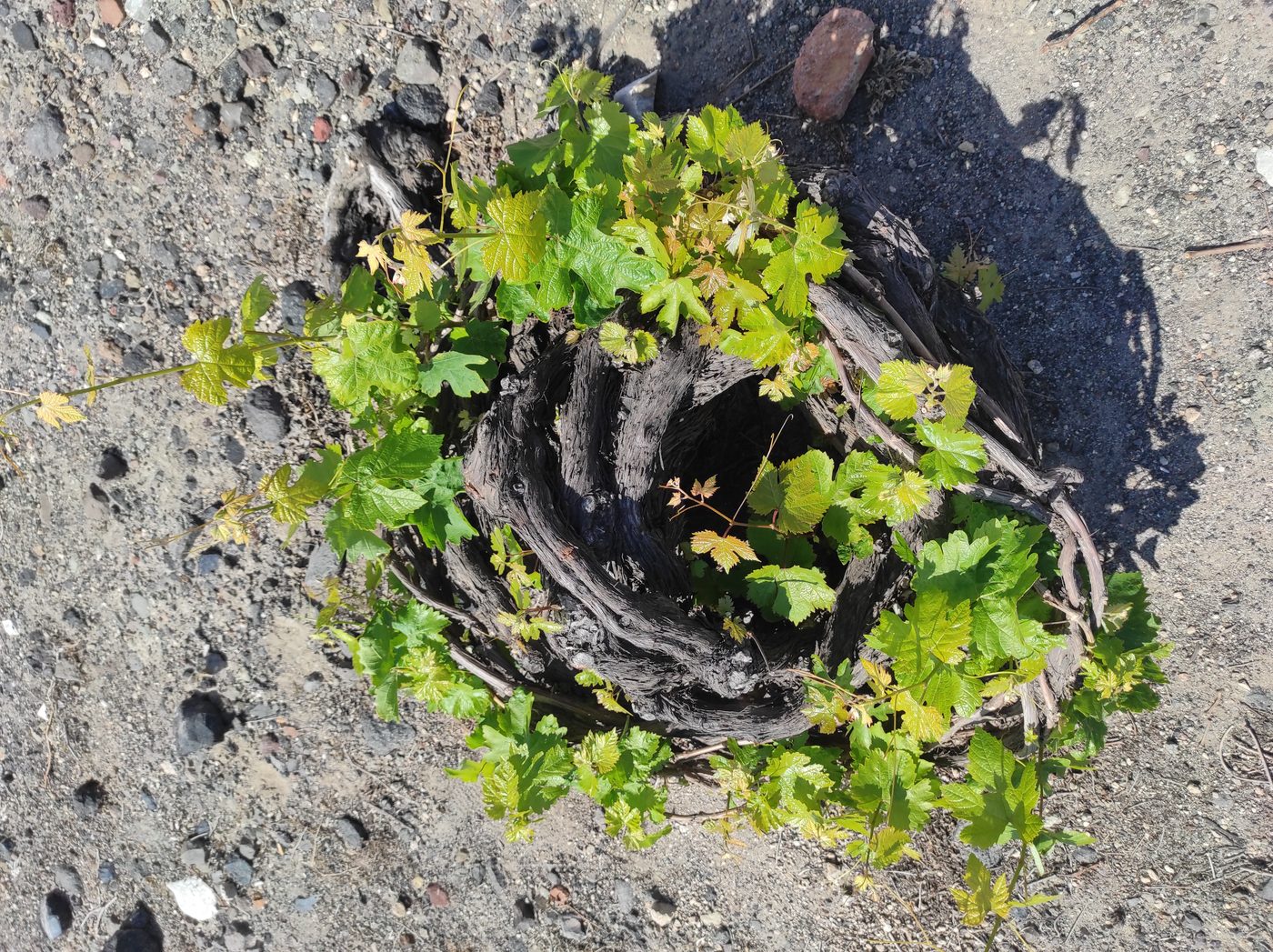
Santorini produces some of Greece's most distinctive wines from vines trained flat against the volcanic soil in basket-shaped "kouloura". A guided wine tour visiting three or four wineries is one of the best half-days you can spend on the island.
In this guide
Santorini's wine reputation rests on Assyrtiko, a bone-dry white grape that thrives in the island's volcanic soil and produces wines with sharp minerality and high acidity. The vines are some of the oldest in the world: many are ungrafted rootstock over 100 years old, pre-dating the phylloxera epidemic that destroyed most European vineyards. The winemaking tradition here goes back 3,500 years.
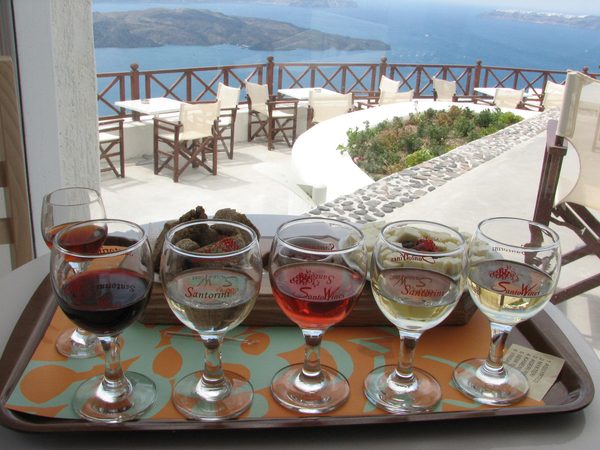
A wine tour typically visits three wineries over 4-5 hours, with 3-4 tastings at each stop (around 12 wines total), a sommelier guide explaining what you're drinking and why, and scenic drives through the island's interior villages. Most tours include hotel pickup and light snacks or tapas alongside the wines.
What Will You Taste?
| Grape / Style | What to Expect |
|---|---|
| Assyrtiko | Santorini's flagship. Dry, crisp, intensely mineral. Citrus and saline notes. The volcanic soil gives it a distinctive character you won't find in mainland Assyrtiko. |
| Nykteri | A barrel-aged Assyrtiko blend, traditionally made at night ("nykta" = night) to avoid the heat. Richer and rounder than standard Assyrtiko. |
| Vinsanto | A sweet dessert wine made from sun-dried Assyrtiko and Aidani grapes. Deep amber colour, flavours of dried apricot, honey, and caramel. The name predates Italian Vin Santo -- Santorini's version is the original. |
| Athiri | A softer, lighter white. Floral and less acidic than Assyrtiko. |
| Aidani | Aromatic white, often blended with Assyrtiko. Citrus blossom and peach notes. |
| Mandilaria | The island's main red grape. Light-bodied, high acidity. Rarely seen outside Greece. |
The Vinsanto was the revelation for me. I expected something cloyingly sweet, but the good producers make it with enough acidity to balance the sugar. Buy a bottle at the winery. It is half the price of what you will pay at the airport.
Which Wineries Are Worth Visiting?
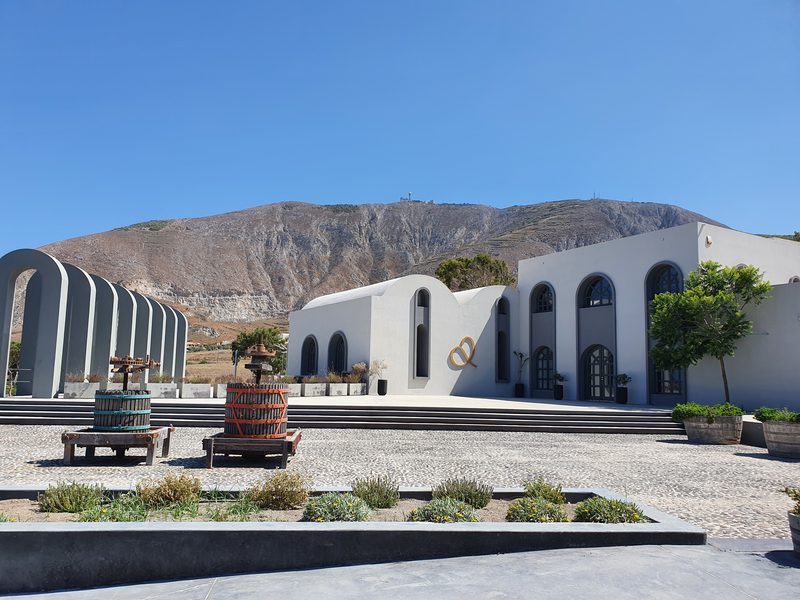
The island has around 20 wineries. A guided tour will typically visit three, chosen for variety. The standouts:
Santo Wines
The most famous. Perched on the caldera edge at Pyrgos with sweeping views of the volcano and the sea. The tasting terrace is spectacular, especially at sunset. The wines are good (their Assyrtiko and Vinsanto are both excellent), though the experience is more about the view than the winemaking. It's the most crowded winery on the island.
Venetsanos Winery
Built into the cliff face near Megalochori, with caldera views rivalling Santo Wines but fewer crowds. A working gravity-flow winery: the grapes enter at the top and move downward through the production process without pumping. Their Mandilaria rosé is one of the better reds on the island.
Estate Argyros
In Episkopi Gonias, inland. Less dramatic setting but arguably the best wines. Family-run since 1903, with some of the oldest vines on Santorini. Their aged Assyrtikos and Vinsanto are exceptional. This is where the serious wine people go.
Gavalas Winery
One of the oldest on the island, in Megalochori. Known for rare indigenous varieties like Katsano and Gaidouria that you won't find anywhere else. Small, personal, and focused on preserving Santorini's grape heritage.
Boutari Winery
A large, well-known Greek producer with a Santorini outpost near Megalochori. Modern facility, consistent quality, and a good introduction if you're new to Greek wine.
How Do the Tours Work?
| Option | Duration | Price | What's Included |
|---|---|---|---|
| Small-group tour (6-8 people) | 4-5 hours | From 130 EUR | 3 wineries, 12 tastings, tapas, hotel pickup |
| Private tour | 4-5 hours | From 200+ EUR | Same as above but private guide and vehicle |
| Sunset wine tour | 4-5 hours | From 150 EUR | Timed to end at a caldera-view winery for sunset |
| Self-guided (drive yourself) | Flexible | Cost of tastings only (8-20 EUR per winery) | You choose the wineries and pace |
Most guided tours include hotel pickup/drop-off, which matters because you'll be tasting 12 wines and shouldn't be driving afterwards. This is the main advantage of a guided tour over self-driving.
Booking tips: - Book 2-3 days ahead in summer. The sunset tours in particular sell out fast. - Morning tours tend to have smaller groups and calmer tasting rooms. - Free cancellation is standard on most booking platforms.
Can You Visit Wineries Without a Tour?
Yes. Most wineries welcome walk-ins for tastings, though booking ahead is advisable in summer. A tasting flight costs 8-20 EUR per winery depending on how many wines you try. Some wineries (Santo Wines in particular) get extremely busy at sunset. Arrive early or you will queue.
If you're driving yourself, a good three-winery circuit:
- Estate Argyros (morning, best wines)
- Gavalas Winery (midday, rare varieties)
- Santo Wines or Venetsanos (late afternoon/sunset, best views)
This route moves roughly south to north and ends with the caldera view.
What Should You Know Before Going?
- You don't need to be a wine expert. The guides explain everything clearly. The point is enjoyment, not expertise.
- Eat breakfast beforehand. Twelve wine tastings on an empty stomach is a bad idea, even with tapas between wineries.
- The vines look strange. Santorini's vines are trained in a low basket shape called "kouloura" (literally "wreath") to protect the grapes from the strong Aegean wind. They look like nothing you've seen in wine regions elsewhere.
- Don't drive after a tour. Twelve tastings is enough to impair your judgement. Use a guided tour with transfers, or designate a driver.
- You can buy wine at the wineries. Prices are typically 10-30% cheaper than in shops or restaurants. Shipping to most EU countries is possible from the larger wineries.
- The landscape between wineries is part of the experience. The drive passes through villages like Megalochori and Pyrgos, through vineyard-lined roads with volcanic soil stretching to the horizon. Ask your guide to slow down.
When Is the Best Time for a Wine Tour?
September-October is harvest season. The wineries are at their most active, and you might see grapes being pressed. The flavour of freshly crushed Assyrtiko is something you don't forget.
May-June offers pleasant temperatures and smaller crowds.
July-August is peak tourist season. Wineries are busy, especially Santo Wines at sunset. Morning tours are a better bet.
March-April. Some wineries may be closed or have limited hours. Check before visiting.
Wine tours run 4-5 hours and visit 3 wineries. Prices start from 130 EUR per person including tastings, tapas, and hotel pickup. Book ahead in summer.
Planning more adventures on the island? Browse our complete guide to the best day trips from Santorini.
Last updated: