Santorini's food scene runs on volcanic soil, a few ingredients you won't find anywhere else, and tavernas that haven't changed their recipes in generations. A food tour is one of the best ways to skip the restaurants that live off passing trade and actually eat well.
In this guide
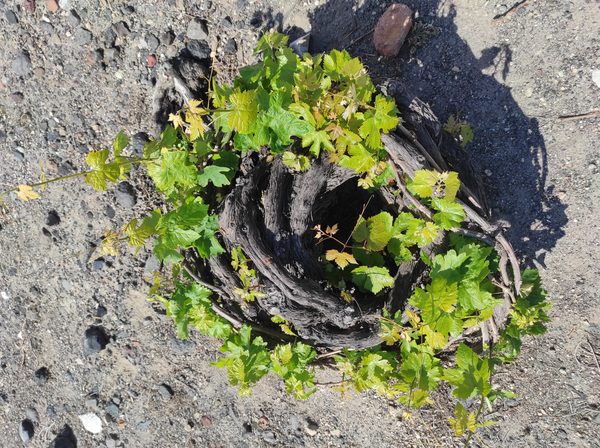
The island's volcanic terroir produces ingredients with unusual intensity: cherry tomatoes that taste sweeter and more concentrated than mainland varieties, white aubergines, capers, and fava beans (actually yellow split peas) that have been cultivated here for centuries. The local wine, Assyrtiko, is grown in basket-shaped vines trained low to the ground to survive the Meltemi wind. None of this is marketing. The food genuinely tastes different here.
A guided food tour takes you to the places that locals actually eat, introduces you to the producers, and explains why Santorini's cuisine is distinct from the rest of Greece. You'll eat more in four hours than you thought possible.
What Kind of Food Tours Are Available?
| Tour Type | Duration | Group Size | What's Included |
|---|---|---|---|
| Walking food tour | 4-5 hours | Small group (up to 10) | 7+ food stops, tastings, village walk |
| Private food tour | 4-6 hours | Private (you + guide) | Customised route, tavernas, wineries |
| Sunset catamaran + food | 5 hours | Small group | Sailing, fresh seafood dinner, wine |
| Self-guided eating | Your pace | Just you | Freedom to choose, no commentary |
The walking tours are the best value for a first visit. You'll hit more places than you'd find on your own, and the guides know which tavernas are genuinely good versus which ones pay for TripAdvisor placement.
What Will You Eat?
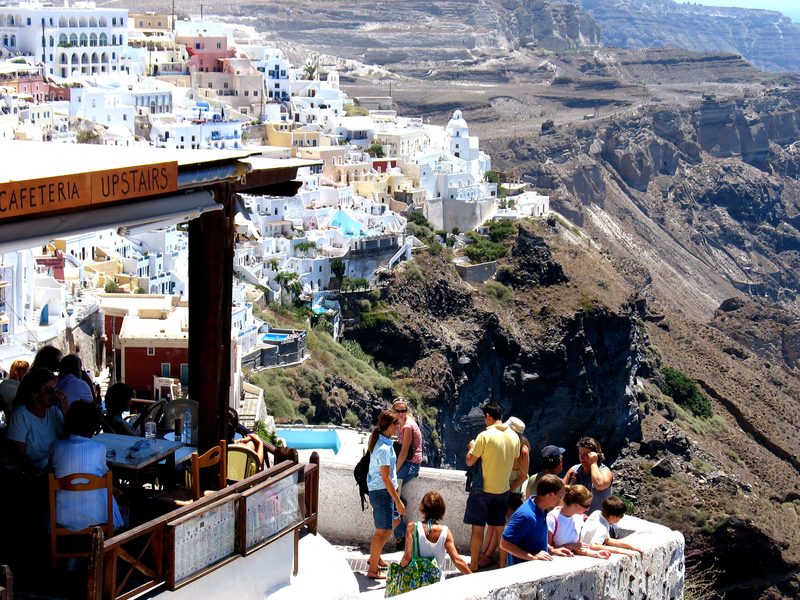
The highlights of a typical Santorini food tour:
Fava
The island's signature dish. Not what you think of as "fava" elsewhere. This is a puree of yellow split peas grown in Santorini's volcanic soil, drizzled with olive oil and lemon, sometimes topped with capers and onion. It appears on every taverna menu, and the good versions are extraordinary. The bad versions are indistinguishable from hummus. A food tour takes you to the good ones.
Tomatokeftedes
Tomato fritters made with Santorini's cherry tomatoes, herbs, and onion, deep-fried until crispy. These are the island's most addictive bar snack. The tomatoes are the key. They're smaller and more flavourful than standard varieties because the volcanic soil and limited rainfall concentrate the sugars.
Fresh Seafood
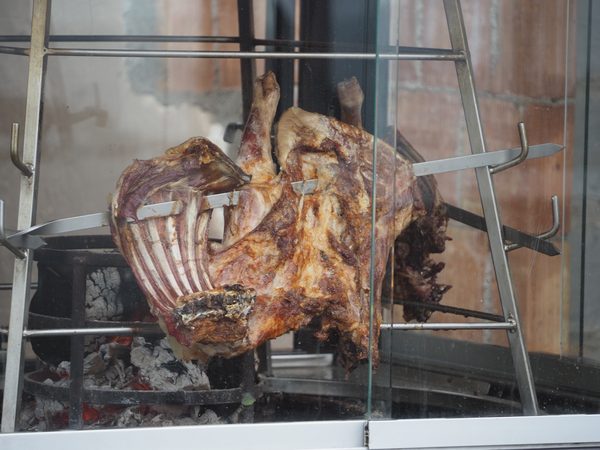
Grilled octopus is everywhere and ranges from excellent to rubbery depending on the taverna. The food tour advantage: someone who knows the difference takes you to the right place. You'll also likely try grilled fish, shrimp saganaki (baked in tomato sauce with feta), and possibly sea urchin if you're adventurous.
Cycladic Cheeses and Cold Cuts
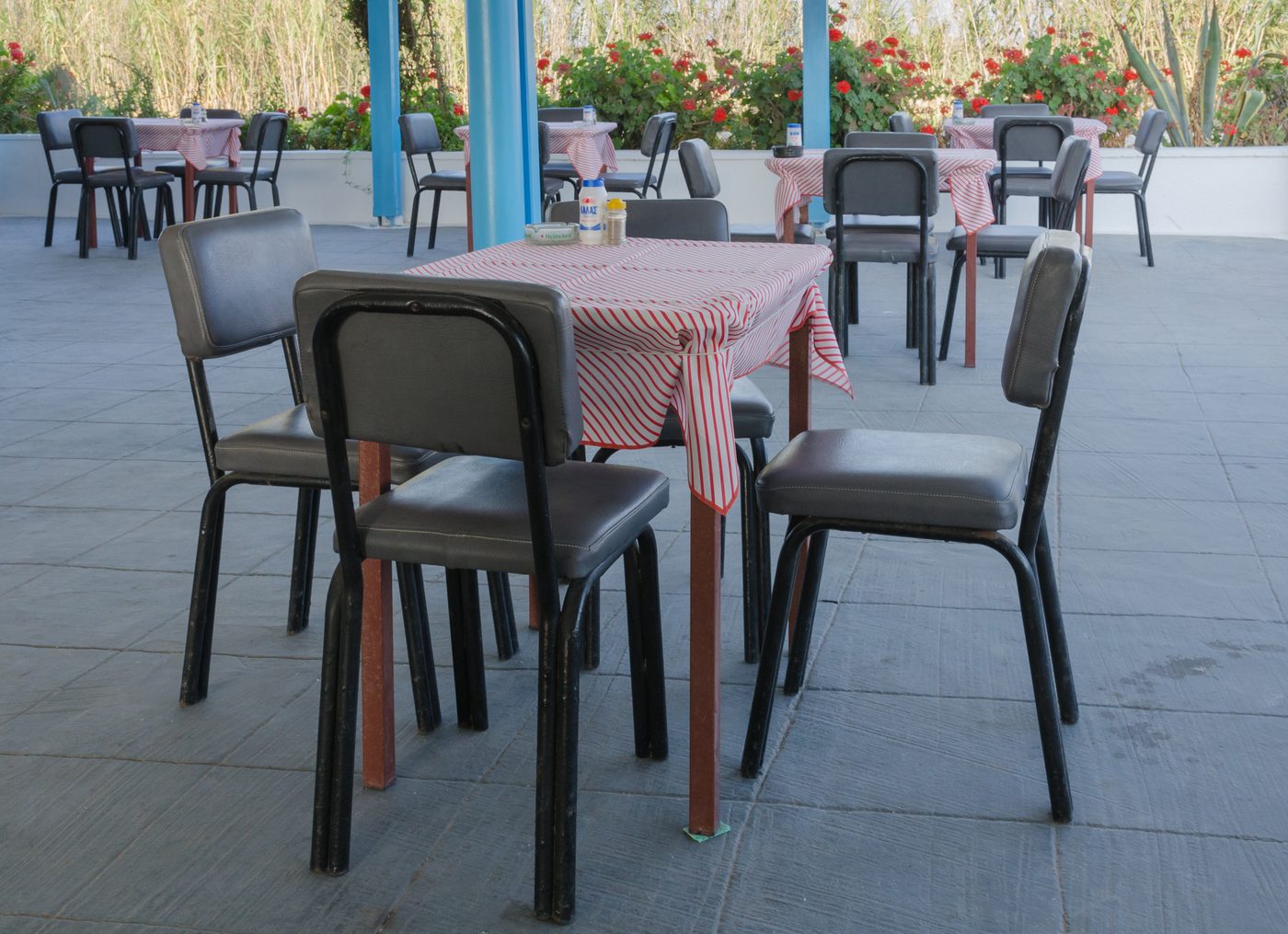
Local cheeses include chloro (a soft, fresh cheese) and kopanisti (aged, peppery, spreadable). Paired with cured meats and bread, this is how many food tours start: a casual meze plate at a village taverna.
Wine
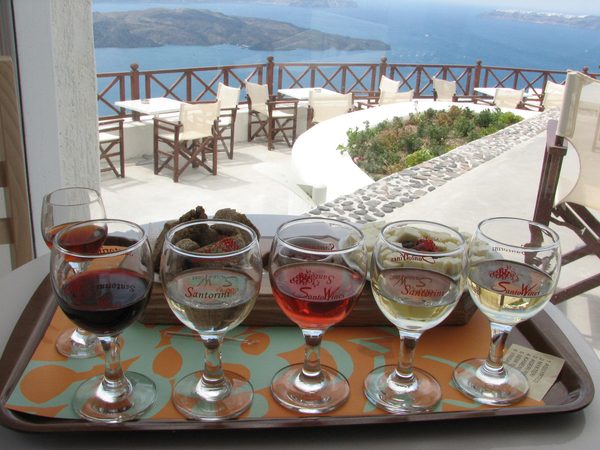
Most food tours include wine stops. Assyrtiko is the flagship: a dry, mineral white that pairs perfectly with seafood and the local fava. You'll also encounter Nykteri (a barrel-aged white) and Vinsanto (a sweet dessert wine made from sun-dried grapes). Even if you've done a separate wine tour, tasting these alongside food changes how they hit.
Street Food and Sweets
Gyros and souvlaki from a local spot, bakery pastries, and traditional sweets like melitinia (small cheese pastries with mastic). Lucky's Souvlakis in Fira is frequently mentioned as a reliable quick-eat spot.
How Much Does It Cost?
Prices vary by operator and type:
- Group walking food tour: Typically 80-120 EUR per person (includes all tastings)
- Private food tour: 150-250+ EUR per person
- Sunset catamaran with food: 150-200+ EUR per person
Most tours include all food and drink tastings in the price. You shouldn't need to spend anything extra beyond tips.
For self-guided eating, budget 30-50 EUR per person for a good taverna meal with wine.
Where Do the Tours Go?
Most walking food tours focus on Fira and the surrounding villages. It's the capital, has the most concentrated food scene, and is accessible from anywhere on the island. Some tours also visit:
- Oia. More upmarket, famous restaurants like Selene (now relocated), caldera-view dining
- Pyrgos. Quieter village with traditional tavernas away from the tourist strip
- Megalochori. Wine village with old canava (wine cellars) converted to tasting rooms
The best tours take you off the main caldera walkway into the back streets where the prices drop and the quality goes up.
A Self-Guided Food Day
If you'd rather eat your way around the island independently:
- 09:00: Breakfast at a bakery in Fira (bougatsa or spanakopita with Greek coffee)
- 10:30: Drive or bus to Pyrgos. Coffee in the village square, browse the small shops.
- 12:30: Lunch at a traditional taverna in Pyrgos or Megalochori. Order fava, tomatokeftedes, and grilled fish.
- 14:30: Visit a winery (Santo Wines or Venetsanos for caldera views, Gavalas or Hatzidakis for production focus)
- 16:30: Drive to Oia
- 17:00: Late afternoon meze at a harbour-side taverna in Ammoudi Bay (grilled octopus, cold Assyrtiko)
- 19:00: Watch the sunset with a glass of Vinsanto
What Should You Know Before Going?
- Santorini is expensive for food. A waterfront meal in Oia or Fira with caldera views can easily hit 50-80 EUR per person. The villages inland (Pyrgos, Megalochori, Emporio) are significantly cheaper for similar or better quality.
- Book tours in advance in summer. Small-group tours fill up, especially the popular sunset options.
- Food tours are filling. Don't eat a big breakfast beforehand. The seven-plus stops add up quickly.
- Dietary restrictions: Most operators can accommodate vegetarian and some can handle gluten-free or vegan with advance notice. Mention it when booking.
- The cherry tomato season matters. Santorini's tomatoes are at their best from late June through September. Outside this window, the tomatokeftedes are still good but made with preserved tomatoes rather than fresh.
- Selene was one of Santorini's most celebrated restaurants, known for elevating local ingredients. It's changed locations and format over the years. Check its current status before making it a centrepiece of your plans.
When Is the Best Time for a Food Tour?
June-September. Peak produce season. Cherry tomatoes, fava, and white aubergines are all fresh and local.
May and October. Still good, slightly less variety in seasonal produce. Tours run with smaller groups.
November-April. Many tour operators don't run in winter. Some tavernas close. Self-guided eating is still possible but options narrow significantly.
A guided food tour typically runs 4-5 hours and costs 80-120 EUR per person. Santorini's key dishes: fava, tomatokeftedes, grilled octopus, Assyrtiko wine. Book in advance during summer.
Planning more adventures on the island? Browse our complete guide to the best day trips from Santorini.
Last updated: