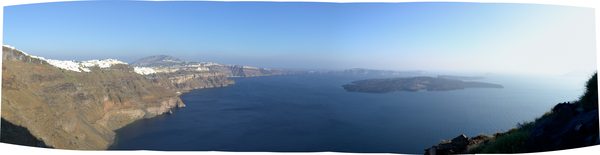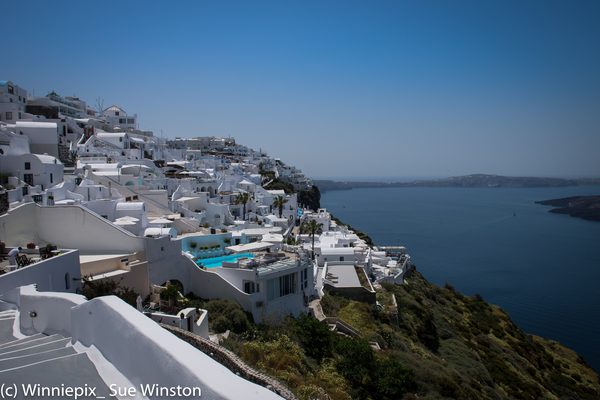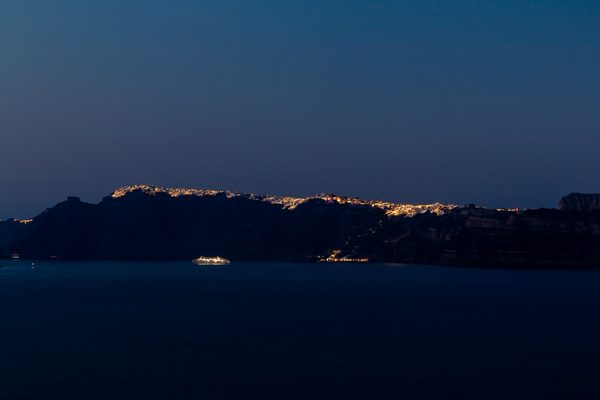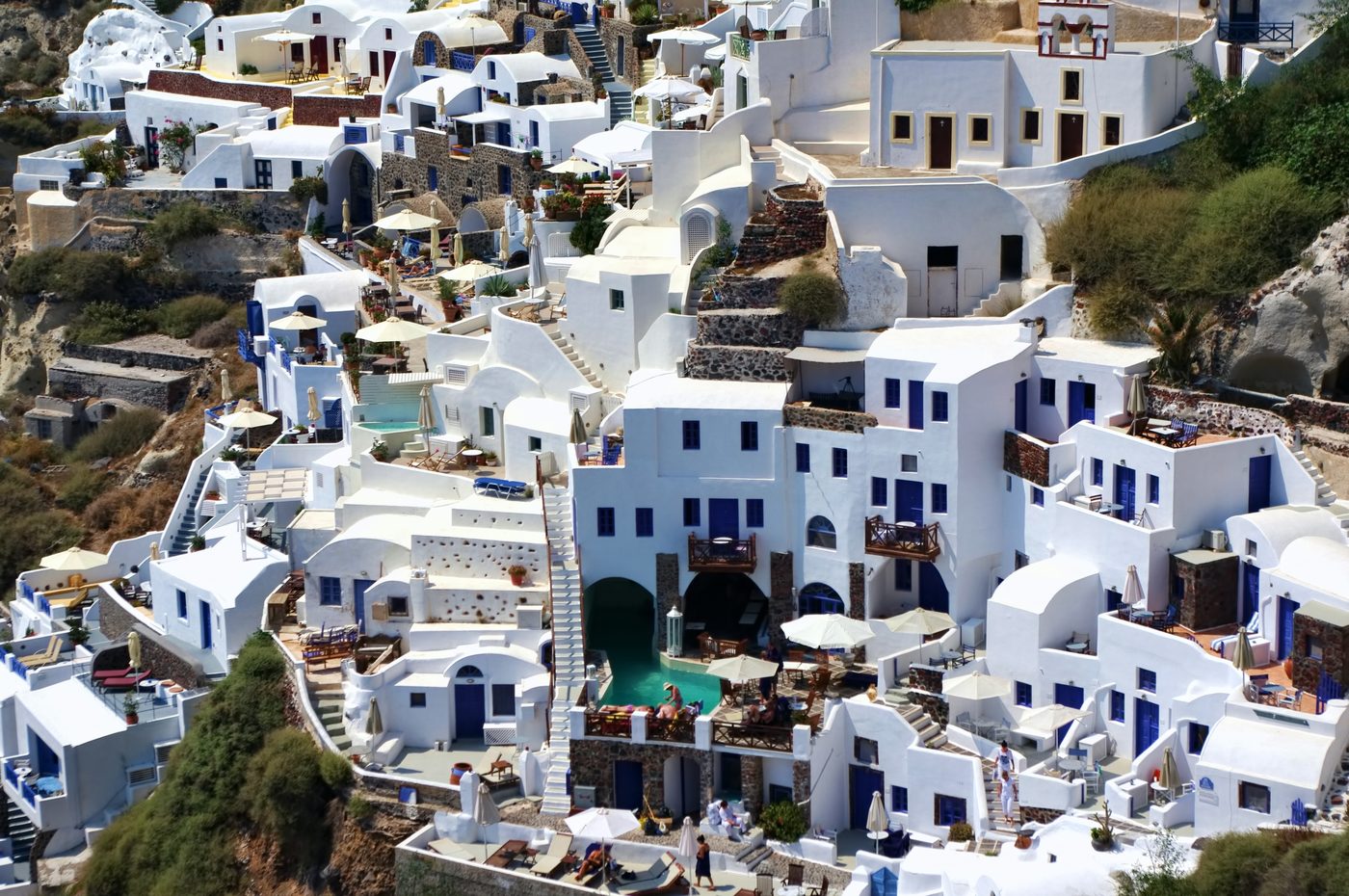
The best time to visit Santorini is late September: the sea is still summer-warm, the air has cooled to the mid-20s Celsius, the crowds thin out after the first week, and prices start falling. May and early June are the close runner-up. Everything is open and warm, but you skip the July-August crush. Peak summer is at its most photogenic but hot, expensive, and shoulder-to-shoulder; winter is cheap and empty but half the island is shut.
In this guide
That is the short version. The longer answer depends on what you actually want: beach weather, empty caldera paths, cheap hotels, or the full high-season spectacle. Santorini is a genuinely different island in April than it is in August, and both versions have their fans.
Santorini gets over 10 hours of sunshine a day from May through September, daytime temperatures run from 22C to 30C+, and the sea is swimmable from June through October. That is a wide window. So the real question isn't "when is the weather good?" (it's good for six months of the year) but "when do the crowds, the prices, and the heat line up with the trip you have in mind?"
Santorini Month by Month at a Glance
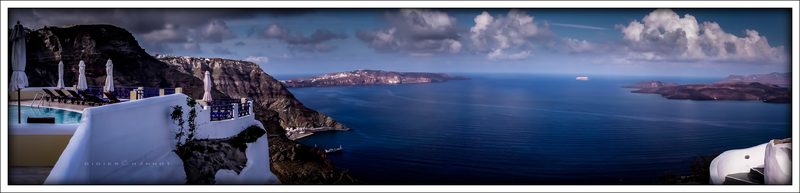
| Month | Day temp | Sea | Crowds | Verdict |
|---|---|---|---|---|
| January | 10-14C | Too cold | Almost none | Cheap, quiet, half-closed |
| February | 10-14C | Too cold | Almost none | Cheap, quiet, half-closed |
| March | 12-16C | Cold | Very light | Reopening slowly, still bare |
| April | 15-20C | Cool | Light-moderate | Great for hiking and photos |
| May | 19-24C | 18-20C | Moderate | Excellent all-rounder |
| June | 24-28C | 21-23C | Building | Warm sea, pre-peak crowds |
| July | 26-30C | 23-25C | Peak | Hot, windy, packed |
| August | 27-31C | 24-26C | Maximum | Hottest, priciest, busiest |
| September | 24-28C | 23-25C | Dropping | The best month overall |
| October | 19-23C | 21-22C | Light | Warm, golden, winding down |
| November | 15-19C | Cool | Minimal | Cheap, quiet, some rain |
| December | 12-15C | Cold | Virtually none | Cheap, empty, half-closed |
When Is the Best Time to Visit Santorini Overall?
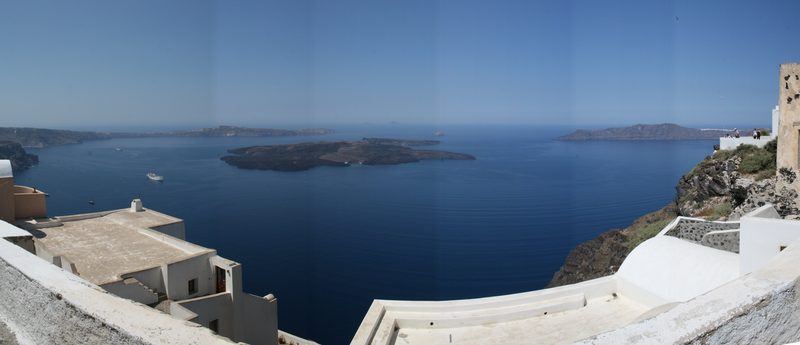
If you can pick your dates freely, pick late September. It is the consensus favourite for a reason: the sea has soaked up a whole summer of heat and is still warm enough to swim in comfortably, the fierce August air temperatures have eased into the mid-20s, and the crowds noticeably thin out once the first week is past. Prices soften at the same time. You get summer without the punishment.
May is the runner-up and, for some travellers, the actual winner. It is warm enough for everything and cool enough that the famous Fira-to-Oia caldera walk doesn't feel like an endurance event. Beaches are pleasant, everything is open, ferry schedules are full, and prices sit well below their August peak. Early June belongs in the same conversation: reliably warm sea, long days, and crowds that are building but haven't yet peaked.
April and October are the shoulders of the shoulder season: quieter and cheaper still, brilliant for hiking, photography, and villages, but with sea temperatures that only the committed will swim in.
When Is Santorini Cheapest?
The cheapest months are November through March, when accommodation prices fall hard and flights are at their lowest. But that is because much of the island is closed, and you won't be swimming.
For value that still comes with a usable island, aim for April-May or late September-October. A decent double room in Perissa or Kamari runs roughly 40-80 EUR a night in shoulder season, against 80-150 EUR (and far more at the caldera edge, where August rooms can hit 400-600+ EUR) in July and August. When you go is the single biggest lever on your budget, bigger than where you stay or where you eat. If you are watching every euro, our guide to doing Santorini on a budget pairs naturally with a shoulder-season trip: the bus is 2.20 EUR on most routes year-round, and the best things on the island (the caldera walk, the sunset, the villages) are free whatever the month.
When Is Santorini Least Crowded?
November to March is emptiest by a wide margin. You may have Oia's lanes almost to yourself. But that solitude comes with closed restaurants, reduced ferries, and short daylight.
For thin crowds you can actually enjoy, the target is April, early May, October, and late September. The contrast with peak season is stark: in July and August every hotel is booked, popular restaurants need reservations days ahead, cruise-ship days pour thousands of extra visitors onto the caldera, and the sunset spot in Oia is standing-room-only. If crowd-avoidance is your priority but you still want warmth and open businesses, late September is again the sweet spot.
When Can You Swim in Santorini?
The swimming season runs roughly June through October, when the sea sits between about 21C and 26C. It peaks in August (24-26C, the warmest water of the year) and stays very swimmable through September and into early October, when the water is still holding around 21-22C from the summer.
Outside that window the sea is bracing to genuinely cold. April and May tempt the brave (18-20C by late May), but most people will find it too cool for a proper swim. One thing worth knowing: Santorini's beaches are volcanic black, red, and white sand and pebble, and that dark sand gets scorching underfoot in high summer. Water shoes earn their place from June to September regardless of how warm the sea is.
What's the Best Month for a Honeymoon?
Santorini is one of the most photographed honeymoon destinations in the world, and the best month for it balances romance against comfort. Late September wins again: warm evenings, swimmable sea, dramatic light, and enough breathing room at the Oia sunset that you are not sharing your moment with a thousand strangers. Late May and early June are the strong alternatives: long, warm days and softer prices, though the sea is a touch cooler.
Avoid a peak-August honeymoon if you can. It is beautiful, but the heat is relentless, the caldera terraces are crammed, and the prices are at their most brutal precisely when you were hoping to splurge. If August is your only option, book everything (hotel, sunset restaurant, cruise) months ahead and manage your expectations about the crowds.
When Do Things Close for Winter?
Santorini's tourist season tapers off through late October and November, and by December, January, and February many hotels, restaurants, and tour operators are shut, with ferry schedules cut back and the occasional day of rain. The island doesn't disappear. The caldera views remain, the Fira-to-Oia path stays open, and the empty villages have an eerie, photogenic beauty. But your choices for dining, activities, and getting around shrink considerably.
Reopening is gradual. Some businesses stir in late March, and by April most hotels and restaurants are back for the season. If you are planning ferry-based day trips from Santorini to other Cycladic islands, remember that off-season sailings are sparse and weather-dependent, so winter is not the time for ambitious island-hopping.
What About the Meltemi Wind?
The Meltemi is the strong northerly wind that sweeps across the Cyclades from mid-June through September, peaking in July and August. It is the reason Santorini rarely feels as suffocating as 30C+ suggests. But it has a downside. It can:
- Cancel or delay ferries, especially to the smaller islands
- Turn the caldera's west-facing terraces from breezy to unpleasant
- Kick up choppy conditions on exposed beaches
- Leave the Imerovigli-to-Oia stretch of the caldera hike feeling exposed
The Meltemi is a factor, not a dealbreaker. But if your trip involves island-hopping by ferry in high summer, build some slack into the schedule.
How Long Should You Stay?
Most itineraries land on 4-5 days for a well-rounded Santorini trip: enough time for the Fira-to-Oia hike, a beach day or two, a caldera cruise or volcano visit, Akrotiri and a winery, and unhurried village wandering. Three days covers the highlights comfortably. A week lets you genuinely slow down. A single day, off a cruise or a ferry, is enough for the caldera, Fira, and the Oia sunset, but only just.
When Should You Book?
- Peak season (July-August): Book accommodation 2-3 months ahead, and reserve popular restaurants before you arrive.
- Shoulder season (May-June, September-October): Book 1-2 months ahead for a good selection; restaurant walk-ins are usually fine.
- Off-season (November-April): A few days' notice is plenty. Many places are closed, but the ones that stay open have room.
Late September is the best all-round time to visit Santorini: warm sea, comfortable air, thinning crowds, and falling prices. May and early June are the runner-up window. July and August are the hottest, priciest, and most crowded; November through March are cheap and empty but half-shut. The island is genuinely pleasant from April through October.
Planning more adventures on the island? Browse our complete guide to the best day trips from Santorini.
Last updated: