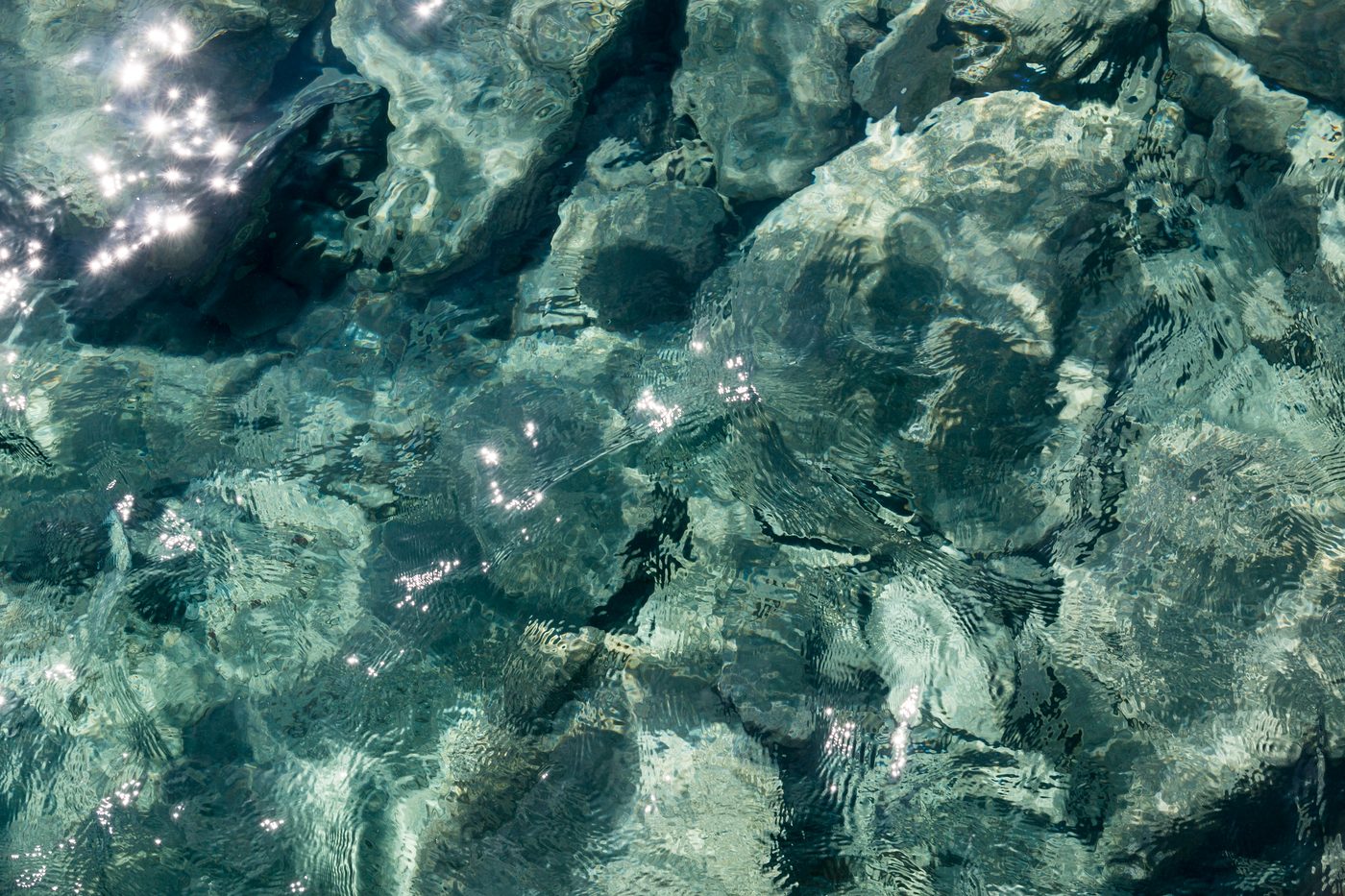
Santorini's volcanic caldera isn't just dramatic from the surface. Underwater, the island offers lava formations, caves, wrecks, and walls dropping to 40 metres, all in water clear enough to see for 30 metres on a good day. Several PADI-certified dive centres operate year-round, with courses for complete beginners and sites that challenge experienced divers.
In this guide
Most people come to Santorini for the sunset and the views. The diving doesn't get the same marketing, but the volcanic geology that makes the caldera so photogenic also creates genuinely unusual underwater scenery. You're diving through the remains of one of the most powerful volcanic eruptions in recorded history: lava formations, pumice walls, and underwater caves that don't look like anything you'll see at a typical Mediterranean dive site.
What Are the Dive Sites Like?
Santorini has around 42 documented dive sites, clustered around the caldera, the outer coast, and the volcanic islands in the bay.
Caldera Dives
The main attraction. The caldera walls drop steeply from the surface, with volcanic rock formations, overhangs, and small caves. Visibility is typically excellent: 20-30 metres in summer. The volcanic geology means the underwater landscape is unlike typical Cycladic diving, with dark rock, dramatic depth profiles, and unusual formations created by lava cooling underwater.
Cave and Lava Dives
Several sites feature swim-throughs and cave systems formed by lava flows. These range from wide, daylight-lit passages (suitable for less experienced divers) to tighter formations that require more confidence. The lava castings (shapes left by cooling lava) are visually striking and unique to volcanic dive sites.
Wreck Dives
There are historic wrecks around the island, though details vary by operator and conditions. Wrecks serve as artificial reefs, attracting marine life and creating interesting dive environments. Ask your dive centre about current accessibility. Some wrecks may be deeper or more advanced-level.
Reef and Wall Dives
The outer coast of Santorini has reef systems with typical Aegean marine life: grouper, moray eels, octopus, nudibranchs, and seasonal visitors like barracuda and tuna. The reef dives are generally shallower and well-suited to beginners or second dives in a two-dive session.
What Marine Life Will You See?
Don't come expecting tropical-reef-level biodiversity. The Aegean is temperate Mediterranean, which means the marine life is more subtle but still interesting:
- Nudibranchs (colourful sea slugs that photographers love)
- Octopus (common, often hiding in rocks)
- Moray eels
- Grouper
- Barracuda (seasonal, more common in summer)
- Tuna (occasionally, in deeper water)
- Scorpionfish, damselfish, and wrasse
- Sponges and sea fans on the rock walls
The volcanic substrate supports different life than you'd find at limestone dive sites elsewhere in Greece, which adds interest for experienced divers.
Who Are the Dive Centres?
Several PADI-certified operations run on the island:
| Dive Centre | Notable For |
|---|---|
| Navy's Waterworld | PADI 5-star centre, access to 42 dive sites, full range of courses |
| Santorini Dive Center | Good reviews for advanced courses (Deep Diver), newer facility |
| Caldera Diving Center | Caldera-focused dives |
| Santorini Scuba Academy | 2-day certification courses, strong beginner programme |
All offer equipment rental, guided dives, and PADI certification courses from Discover Scuba (one-day intro) through to Divemaster.
How Much Does It Cost?
Specific pricing varies by operator and season, but rough benchmarks:
| Activity | Approximate Cost |
|---|---|
| Discovery/intro dive (no certification) | 80-120 EUR |
| Two-dive package (certified divers) | ~100 EUR |
| PADI Open Water certification (2-3 days) | 300-450 EUR |
| Advanced courses (Deep Diver, Rescue) | Varies by course |
| Equipment rental | Usually included in dive packages |
One source reports 100 EUR for two dives as a certified diver, which aligns with typical Cycladic dive pricing. Book directly with dive centres for the most accurate current rates.
What Courses Are Available?
| Course | Duration | Who It's For |
|---|---|---|
| Discover Scuba Diving | Half day | Complete beginners, no certification |
| PADI Scuba Diver | 2 days | Quick certification, limited depth |
| PADI Open Water | 3-4 days | Full certification to 18m |
| Advanced Open Water | 2 days | Already certified, want deeper/specialty dives |
| Deep Diver | 2 days | Specialty course to 40m |
| Night Diver | 1-2 sessions | Certified divers wanting a different experience |
| Rescue Diver / Divemaster | Multi-day | Advanced certifications |
The 2-day Scuba Diver certification is popular with visitors who want more than an intro dive but don't have 3-4 days for full Open Water. It limits you to 12 metres depth with a professional, but that's enough to see a lot of what Santorini offers underwater.
How Should You Plan Your Dive Day?
A typical half-day diving excursion:
- 08:00: Meet at the dive centre, paperwork, equipment fitting
- 08:30: Briefing on the dive site, safety review
- 09:00: Boat to the dive site (15-30 minutes depending on location)
- 09:30: First dive (45-60 minutes)
- 10:30: Surface interval, snacks, move to second site
- 11:30: Second dive (45-60 minutes)
- 12:30: Return to shore
- 13:00: Back at the dive centre, log dives
You'll be done by early afternoon, leaving the rest of the day for other activities. Most centres offer morning and afternoon sessions.
What Should You Know Before Going?
- Book in advance in summer. Small boats mean limited spots per session. July and August fill up.
- Most centres offer free cancellation up to 24 hours. Useful if weather changes. Dive trips can be cancelled due to wind and sea conditions.
- The Meltemi wind can affect dive conditions, especially in July-August. Caldera sites are somewhat sheltered, but exposed outer-coast sites may be inaccessible on windy days.
- Water temperature ranges from about 18C in spring to 25C+ in late summer. Wetsuits are provided (typically 5mm in spring/autumn, 3mm in summer).
- No dive experience required for intro sessions. If you can swim and breathe through a regulator, the dive centres will handle the rest.
- Don't fly for 24 hours after diving. If you're flying out of Santorini, schedule your dives at least a day before departure.
- Bring your certification card if you're already certified. Dive centres will ask for it.
When Is the Best Time to Dive?
June-September. Best visibility (20-30m), warmest water (22-25C), calmest conditions. July-August are warmest but windiest.
May and October. Slightly cooler water (18-22C), fewer divers, still excellent visibility. Many experienced divers prefer these months.
November-April. Some centres operate year-round, but conditions are cooler (15-18C) and fewer sites are accessible. Good for serious divers, not ideal for beginners.
Santorini has ~42 dive sites across the caldera and outer coast. PADI-certified centres offer everything from intro dives (~100 EUR for two dives) to full certification courses. Best conditions June-September. Book in advance in summer.
Planning more adventures on the island? Browse our complete guide to the best day trips from Santorini.
Last updated: