Akrotiri is the most important archaeological site on Santorini and one of the best-preserved prehistoric settlements in Europe: a Bronze Age city frozen in time by volcanic ash, with two-storey buildings, drainage systems, and frescoes that predate anything at Pompeii by 1,500 years.
In this guide
Akrotiri was a thriving Minoan trading port until the catastrophic eruption of Thera around 1600 BC buried it under metres of volcanic ash. Unlike Pompeii, no human remains have been found. The inhabitants appear to have evacuated before the eruption, probably warned by earlier earthquakes. What they left behind is extraordinary: multi-storey buildings, painted walls, ceramic workshops, and a drainage system that wouldn't look out of place in a modern village.
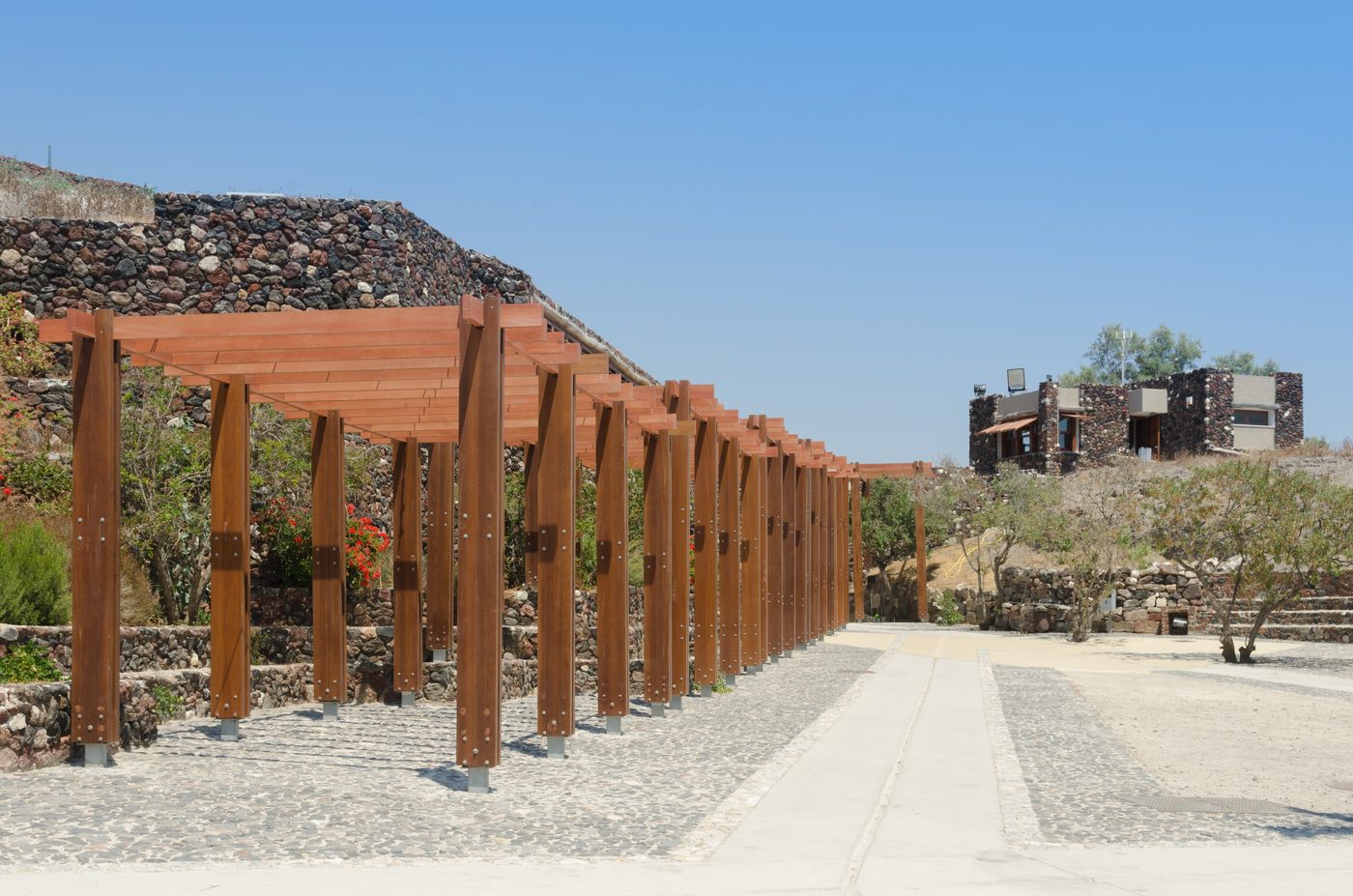
The site was discovered in 1967 by Greek archaeologist Spyridon Marinatos and has been under excavation ever since. Today it's covered by a modern bioclimatic shelter that protects the ruins while letting you walk on elevated platforms above the ancient streets.
How Do You Get to Akrotiri?
Akrotiri is on the southern tip of Santorini, about 15 km from Fira.
| Transport | Details |
|---|---|
| By bus | KTEL buses run from Fira to Akrotiri village. About 30 minutes, 2.20 EUR. Several departures per day but check the timetable -- they're not frequent. |
| By car or ATV | Drive south from Fira. Parking is available near the site entrance. About 20 minutes. |
| By taxi | Around 20-25 EUR from Fira one way. |
| By guided tour | Several operators run half-day tours combining Akrotiri with Red Beach and the lighthouse. Hotel pickup included. |
The archaeological site is a short walk from Akrotiri village. Follow the signs from the main road.
What Will You See?
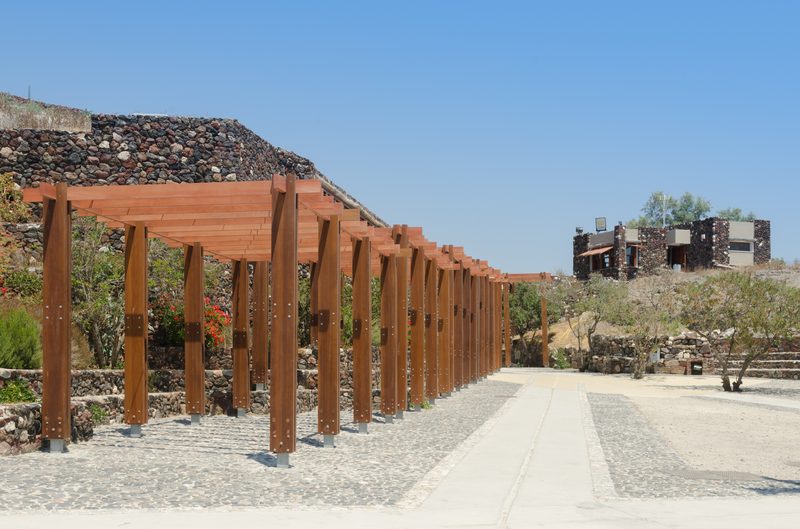
The Excavated City
The walkways take you above the ancient streets on metal platforms, so you're looking down into the buildings. The level of preservation is remarkable. You can see doorways, staircases, storage jars still in place, and the layout of individual rooms. The buildings reached two and three storeys, with the upper floors often better preserved than the ground level because the volcanic ash filled the structures from the top down.
Key areas include:
- Xeste 3. A large public building, possibly a shrine. This is where the famous fresco of the "Saffron Gatherers" was found.
- The West House. A wealthy merchant's home with the "Fisherman" and "Fleet" frescoes.
- The House of the Ladies. Named after the fresco of elegantly dressed women found inside.
- Triangle Square. An open public space at the intersection of streets, giving you a sense of the town's layout.
Important note: The original frescoes have been removed to the Museum of Prehistoric Thera in Fira and the National Archaeological Museum in Athens. What you see at the site are the buildings themselves, not the wall paintings. Visit the Museum of Prehistoric Thera before or after Akrotiri to see the frescoes in context.
The thing that struck me most wasn't the buildings or the frescoes. It was the drainage system. These people had indoor plumbing 3,600 years ago. Stone-lined channels under the streets carried wastewater away from the buildings. It puts things in perspective.
The Bioclimatic Shelter
The massive modern roof over the site is an engineering project in its own right. It was completed in 2012 after the original shelter collapsed in 2005 (killing one visitor and closing the site for seven years). The new structure is designed to regulate temperature and humidity while protecting the ruins from rain and sun.
How Should You Plan Your Visit?
A visit to the archaeological site takes about 1-1.5 hours. Combine it with nearby attractions for a half-day in the south of the island:
- 09:00: Arrive at Akrotiri archaeological site (opens at 08:00 most summer days)
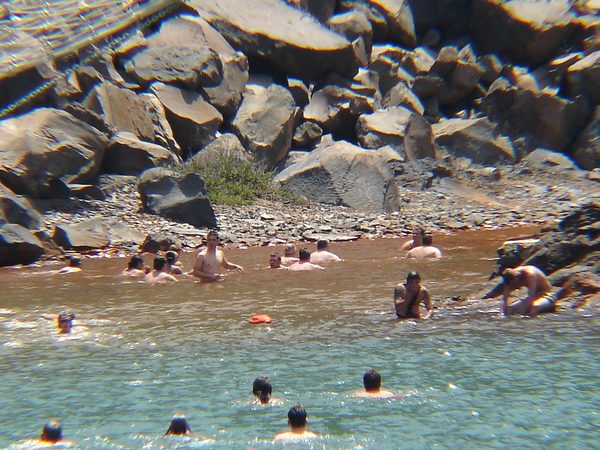
- 10:30: Walk to Red Beach (about 10-15 minutes on foot from the site). Swim if the conditions are right, but check for rockfall warnings.
- 12:00: Drive or walk to Akrotiri Lighthouse for panoramic views. The lighthouse itself is not open to visitors, but the area around it is free to access and the sunset views are among the best on the island.
- 13:00: Lunch at one of the tavernas in Akrotiri village
Alternatively, pair Akrotiri with the Museum of Prehistoric Thera in Fira to see the frescoes alongside the ruins where they were found.
What Should You Know Before Going?
- Entry fee: 20 EUR (full), 10 EUR (reduced). Free on certain public holidays and for EU citizens under 25. Buy at the gate, or online at tickets.hh.gr — online tickets are for a timed entry slot.
- Opening hours: In summer (April-October) 08:00-20:00 most days, but Mondays and Thursdays close at 15:30. In winter 08:30-15:30, closed Tuesdays.
- Allow 1-1.5 hours for the site itself. Add time for Red Beach and the lighthouse.
- There is no shade outside the shelter. Wear sun protection, especially if walking to Red Beach or the lighthouse.
- The walkways are accessible for most visitors, though some sections involve stairs. It's mostly flat platforms with railings.
- An audio guide or guided tour adds a lot. Without context, you're looking at old walls. With a guide, you're walking through a Bronze Age city. The on-site audio guide is a few euros extra and well worth it.
- Bring water. There's a small cafe near the entrance but nothing inside the site.
If you only have time for one archaeological site on Santorini, make it Akrotiri. Ancient Thera is impressive for its setting, but Akrotiri is in a different league in terms of what's been preserved.
When Is the Best Time to Visit?
Early morning is best, regardless of season. The site opens at 08:00 most summer days (08:30 on Mondays and Thursdays) and the first hour is the quietest. By mid-morning, tour buses arrive and the platforms get crowded.
May-June and September-October offer comfortable temperatures for the walk to Red Beach and the lighthouse.
July-August are hot. Visit early, stay inside the shelter as long as possible, and carry plenty of water.
Winter visits are possible (the shelter keeps you dry) but check for Tuesday closures and reduced hours.
Akrotiri is 15 km south of Fira. Allow 1-1.5 hours for the site. Entry is 20 EUR. Combine with Red Beach (10 minutes on foot) and the Akrotiri Lighthouse.
Planning more adventures on the island? Browse our complete guide to the best day trips from Santorini.
Heading to Athens? See our guide to the best day trips from Athens.
Last updated: